
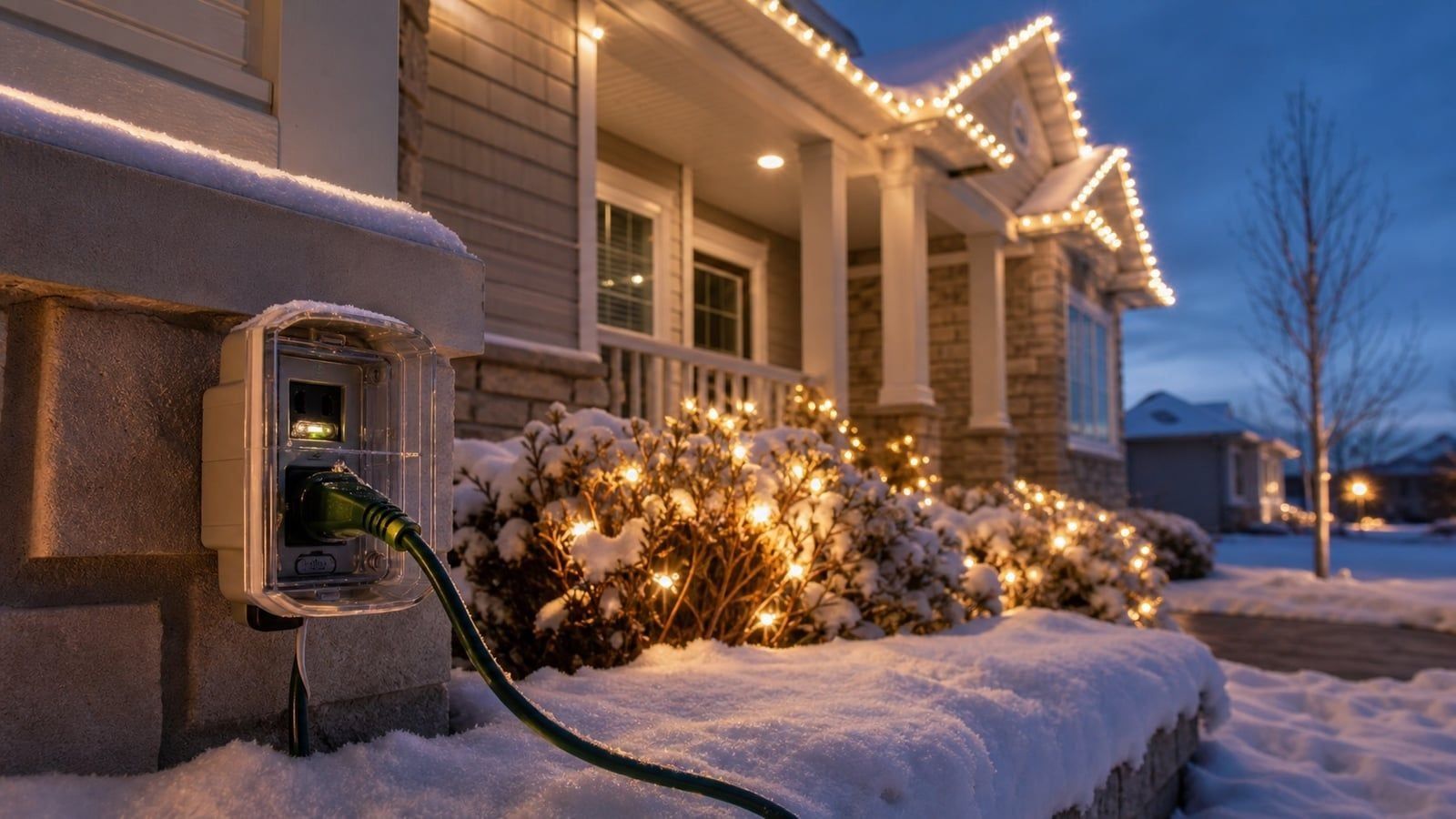
Holiday Lighting Safety: Protecting Your Utah Home from Electrical Fires This Season
The holidays are here, and Northern Utah neighborhoods are transforming into winter wonderlands with dazzling light displays. But behind those twinkling lights is a real electrical safety concern—holiday decorations are involved in an estimated 160 home fires each year, according to the National Fire Protection Association. Here's everything you need to know to keep your family safe while creating a beautiful holiday display.
Understanding Your Home's Electrical Capacity
Before you start hanging lights, you need to know how much your circuits can handle. This isn't about limiting your creativity—it's about preventing fires and protecting your home.
Basic electrical math:
- Standard 15-amp circuit = 1,800 watts maximum capacity
- Safe operating load = 80% of maximum = 1,440 watts
- Standard 20-amp circuit = 2,400 watts maximum
- Safe operating load = 80% of maximum = 1,920 watts
Real-world example: If you're running 10 strands of 100-count incandescent mini lights (each drawing about 40 watts), you're using 400 watts—well within safe limits. But add a few light-up yard decorations (100-200 watts each), and you can quickly overload that circuit.
LED lights change everything: LED holiday lights use 80-90% less electricity than incandescent. Ten strands of LED lights might draw only 40 watts total. This is why we strongly recommend LED for large displays—it's safer, cheaper to operate, and you can connect many more strands together.
Outdoor Lighting Installation Best Practices
Utah's winter weather creates unique challenges for outdoor electrical installations. Temperature swings, snow, ice, and wind all stress your electrical connections.
Essential outdoor safety rules:
1. Use only outdoor-rated equipment
- Look for "UL Listed for Outdoor Use" or similar certification
- Outdoor extension cords are marked with "W" (weather-resistant)
- Green outdoor cords are typically rated for moisture and sunlight
- Indoor cords used outdoors = fire hazard waiting to happen
2. GFCI protection is non-negotiable
- All outdoor outlets must have GFCI protection
- Test GFCI outlets before plugging in lights (press TEST button, then RESET)
- GFCI prevents electrocution from moisture or damaged cords
- If your outdoor outlets aren't GFCI protected, call us—this is a code requirement
3. Keep connections dry and elevated
- Use weatherproof cord covers for outdoor connections
- Elevate connections off the ground using hooks or hangers
- Snow and ice create shock hazards when connections sit in water
- Never bury extension cords under snow—you'll forget where they are and damage them shoveling
4. Secure lights properly
- Use insulated clips designed for holiday lights—never staples or nails
- Staples and nails damage wire insulation and create shock/fire risks
- Check your roof pitch before climbing—Utah ice makes roofs deadly
- Consider hiring professionals for rooflines above single-story
Utah-specific considerations:
- Our temperature swings (40°F days, 10°F nights) cause connections to expand and contract
- Ice buildup can damage light strings and pull connections apart
- Snow load on roof displays can be substantial—secure properly or risk damage
- High winds along the Wasatch Front can turn decorations into hazards
Indoor Christmas Tree Safety
Whether you choose a real or artificial tree, electrical safety around trees requires attention. Trees are involved in roughly 160 home fires annually, with electrical issues being a leading cause.
Real tree safety:
- Water daily—dry trees are extremely flammable
- Keep tree at least 3 feet from heat sources (fireplaces, heaters, vents)
- Check lights daily for heat or damage
- Use only lights rated for indoor use
- Never use candles on or near real trees
- Unplug tree lights before bed and when leaving home
Artificial tree safety:
- Choose fire-resistant trees labeled "fire retardant"
- Pre-lit trees should be UL listed
- Check for frayed wires in tree branches
- Don't overload built-in outlets on pre-lit trees
- Still keep 3 feet from heat sources despite being artificial
How many light strands can you connect? Most light strings allow connecting 3-5 strands end-to-end, but check the manufacturer's label. This varies by:
- Bulb type (LED vs incandescent)
- Wire gauge (thicker wire = more strands)
- Wattage per strand
Never exceed the manufacturer's recommendation. The end-to-end connections heat up with each additional strand, creating fire risk.
Tree lighting best practices:
- Use one outlet per tree if possible
- Don't run tree lights on the same circuit as space heaters
- Inspect every strand before installation—discard any with damage
- Use a surge protector rated for the total wattage
- Consider using a timer to automatically turn lights off at night
Extension Cord Safety (The Most Overlooked Issue)
Extension cords are temporary power solutions, not permanent wiring. Yet during the holidays, many homeowners run them for weeks or months. Here's how to do it safely:
Choose the right cord:
- Length matters: Longer cords = more resistance = heat buildup
- Use the shortest cord that reaches your display
- 16-gauge cord for light loads (up to 1,625 watts)
- 14-gauge cord for heavier loads (up to 1,875 watts)
- 12-gauge for the heaviest loads (up to 2,400 watts)
What gauge do you need? Check the total wattage of everything plugged into the cord, then:
- Under 300 watts (just lights): 16-gauge is fine
- 300-1,000 watts (lights + decorations): 14-gauge minimum
- 1,000-1,500 watts (heaters, multiple decorations): 12-gauge required
Critical extension cord mistakes:
- Daisy-chaining power strips: Never plug a power strip into another power strip. This creates overload and fire risk
- Running cords under rugs or furniture: Heat buildup with no ventilation = fire
- Using damaged cords: Any fraying, exposed wire, or damage means discard it
- Coiling excess cord: Coiled cords create heat buildup—lay them flat
- Outdoor cords through windows: This damages cord insulation in the window/door seal
When you need permanent solutions: If you're running extension cords to the same locations every year, you need additional outdoor outlets. We install weatherproof outdoor outlets year-round. Cost is typically $200-400 per outlet depending on distance from the panel, but you'll:
- Eliminate extension cord hazards
- Have convenient power for summer use (grills, tools, etc.)
- Add value and functionality to your home
- Never trip over holiday extension cords again
Large Display? You Need Professional Help
We love seeing elaborate holiday displays in Northern Utah—they bring joy to entire communities. But large displays need professional electrical planning.
Signs you need an electrician for your display:
- You're running more than 6 extension cords
- You're connecting multiple power strips to handle your lights
- Breakers trip when you turn on your display
- You're using outdoor lights that draw significant power (LED displays, inflatables, animated decorations)
- Your display includes custom electrical elements
- You're installing roof or high-wall lights (we have the equipment)
What we provide for large displays:
- Load calculations: We determine exactly how much power your display needs
- Dedicated circuits: Install new circuits exclusively for holiday displays
- Outdoor outlet installation: Strategic placement eliminates extension cords
- Timer installation: Automatic on/off for your entire display
- GFCI protection: Ensure all outdoor circuits are properly protected
- Safe installation: Professional roof and height work with proper equipment
Typical costs for display support:
- Electrical inspection and load calculation: $100-200
- Single outdoor outlet installation: $200-400
- Dedicated 20-amp circuit for displays: $400-800
- Timer installation: $150-300
- Full display design and installation: Custom quote
These aren't annual costs—once installed, you have permanent, safe infrastructure for holiday displays forever.
When Things Go Wrong: Warning Signs
Your electrical system will warn you before serious problems occur. Don't ignore these signs:
Immediate danger signs (call electrician NOW):
- Burning smell from outlets, cords, or decorations
- Outlets or switches hot to the touch
- Sparks when plugging in or unplugging
- Buzzing or crackling sounds from outlets
- Lights dimming significantly when display turns on
- GFCI outlets that won't reset
Warning signs (schedule service soon):
- Frequently tripping breakers
- Flickering lights when display is on
- Need to reset breakers to run your display
- Extension cords or plugs feeling warm
- Discolored outlets or plug faces
What to do if a breaker trips:
- Unplug everything on that circuit
- Reset the breaker
- Plug items back in one at a time to identify the problem
- If breaker trips immediately without anything plugged in, you have a short—call an electrician
- If breaker trips when display is running, you're overloading—reduce the load or add a circuit
Fire Safety Essentials
Beyond electrical safety, these fire safety measures are critical during the holidays:
Smoke detector checks:
- Test all smoke detectors monthly
- Replace batteries annually (do it Thanksgiving weekend as a tradition)
- Smoke detectors expire after 10 years—check dates and replace as needed
- Install detectors near sleeping areas and on every level of your home
Fire extinguisher preparedness:
- Keep a fire extinguisher in the kitchen and garage
- Learn how to use it BEFORE you need it (PASS: Pull, Aim, Squeeze, Sweep)
- Check pressure gauge monthly—needle should be in green zone
- Replace or service extinguishers annually
Evacuation planning:
- Review fire escape plans with family
- Practice escaping in the dark
- Establish a meeting place outside
- Keep exits clear of holiday decorations and presents
Making It All Easy: Professional Holiday Lighting Services
Many Northern Utah families are switching to professional holiday lighting services, and we often work alongside these companies to provide the electrical infrastructure they need.
Benefits of professional installation:
- No ladder risks (falls are a leading cause of holiday injuries)
- Professional-grade equipment and lights
- Proper electrical knowledge and safety
- Installation and removal service
- Often costs less than buying your own commercial-grade lights
Our role in professional displays: We provide the electrical foundation that makes professional displays possible:
- Outlet placement for optimal display coverage
- Adequate circuit capacity for large displays
- Timer and control systems
- Troubleshooting when things don't work as expected
Energy Costs: What Will Your Display Cost?
Let's talk about the elephant in the room—what does a holiday light display cost to operate?
Incandescent lights:
- 100-count mini light strand: ~40 watts
- 10 strands = 400 watts
- Running 6 hours per night for 45 days = 108 kWh
- At Utah's average $0.11/kWh = $11.88
LED lights (same display):
- 100-count LED strand: ~4 watts
- 10 strands = 40 watts
- Running 6 hours per night for 45 days = 10.8 kWh
- At Utah's average $0.11/kWh = $1.19
The LED advantage: Same display, 90% less cost. Plus LED lights:
- Last 10-25 times longer than incandescent
- Run cooler (less fire risk)
- More durable (better for Utah weather)
- Can connect more strands together safely
Large displays: If you're running a serious display with multiple circuits, animated decorations, and yard elements:
- Incandescent display: $50-150 per month
- LED display: $5-15 per month
This is why professional displays have switched almost entirely to LED—the economics just make sense.
Post-Holiday Storage and Safety
Proper storage prevents next year's headaches and safety issues:
Taking lights down safely:
- Do it during warmer daylight hours
- Check for ice and snow before climbing
- Inspect each strand as you remove it
- Discard any damaged lights—don't store them
Storage best practices:
- Wind lights around cardboard or use dedicated reels
- Store in dry location (not outdoor sheds where moisture damages them)
- Label cords by location to make next year easier
- Store outdoor and indoor lights separately
- Keep original packaging for specialty items
Pre-storage testing: Some homeowners test light strands before storage. When you pull them out next November, you'll know they work. Others test when unpacking next year. Either works—just don't assume stored lights still work.
Start Planning for Next Year
The best time to plan holiday electrical improvements is right after the holidays when you remember what didn't work:
Common post-holiday upgrades:
- Adding outdoor outlets where you ran extension cords
- Installing dedicated circuits for large displays
- Upgrading to LED lights during post-holiday sales
- Adding timers and control systems
- Improving attic ventilation if decorations caused overheating
January-February is perfect for electrical work:
- Our schedule is less busy
- Weather is cold but often dry
- You have all year to plan and budget
- Work is done before next holiday season
- You remember exactly what frustrated you this year
We're Here to Help
Holiday lighting should be joyful, not stressful or dangerous. Whether you need a safety inspection, additional circuits, outdoor outlet installation, or help designing a spectacular display, Brightline Electric is here to help Northern Utah families celebrate safely.
Our holiday electrical services:
- Pre-holiday electrical safety inspections
- Outdoor outlet installation for permanent solutions
- Dedicated circuit installation for large displays
- Load calculations and electrical planning
- Emergency service when displays cause problems
- Post-holiday electrical assessments
Serving all of Northern Utah: Salt Lake City, Ogden, Layton, Kaysville, Farmington, Centerville, Bountiful, and throughout Davis and Weber Counties.
Call 801-458-0831 or request a free quote for holiday electrical services.
Brightline Electric is a licensed and insured electrical contractor serving Northern Utah. We're available for emergency services, holiday lighting support, and electrical safety inspections throughout the holiday season.