
5 Essential Electrical Safety Tips for Utah Winters
Winter in Northern Utah brings beautiful snow-covered mountains, but it also puts extra stress on your home's electrical system. As temperatures drop and heating systems work overtime, electrical issues become more common. Here are five essential safety tips from our licensed electricians to keep your home safe and warm all winter long.
1. Inspect Your Heating System Before Cold Weather Hits
Before the first major snowfall, have a professional inspect your electrical heating system. Space heaters, electric furnaces, and heat pumps work harder during winter months, and any electrical issues can lead to dangerous situations.
What to look for:
- Frayed or damaged power cords
- Overheating outlets or switches
- Unusual burning smells
- Circuit breakers that trip frequently
Why this matters in Utah: When temperatures drop to single digits (common in northern Utah valleys), your heating system can run 18-20 hours per day. A circuit that handles the load in October may be critically overloaded by January. We see a 300% increase in emergency heating calls during the first cold snap each year—almost all could have been prevented with a pre-season inspection.
What you can do now: Test each heating circuit by running your system at maximum capacity for 2-3 hours while you're home. Feel outlets and switches—they should never be warm to the touch. If they are, that circuit is overloaded and needs professional evaluation before winter peaks.
If you notice any of these signs, call a licensed electrician immediately. Don't wait until your heating fails on the coldest night of the year.
2. Never Overload Outlets with Space Heaters
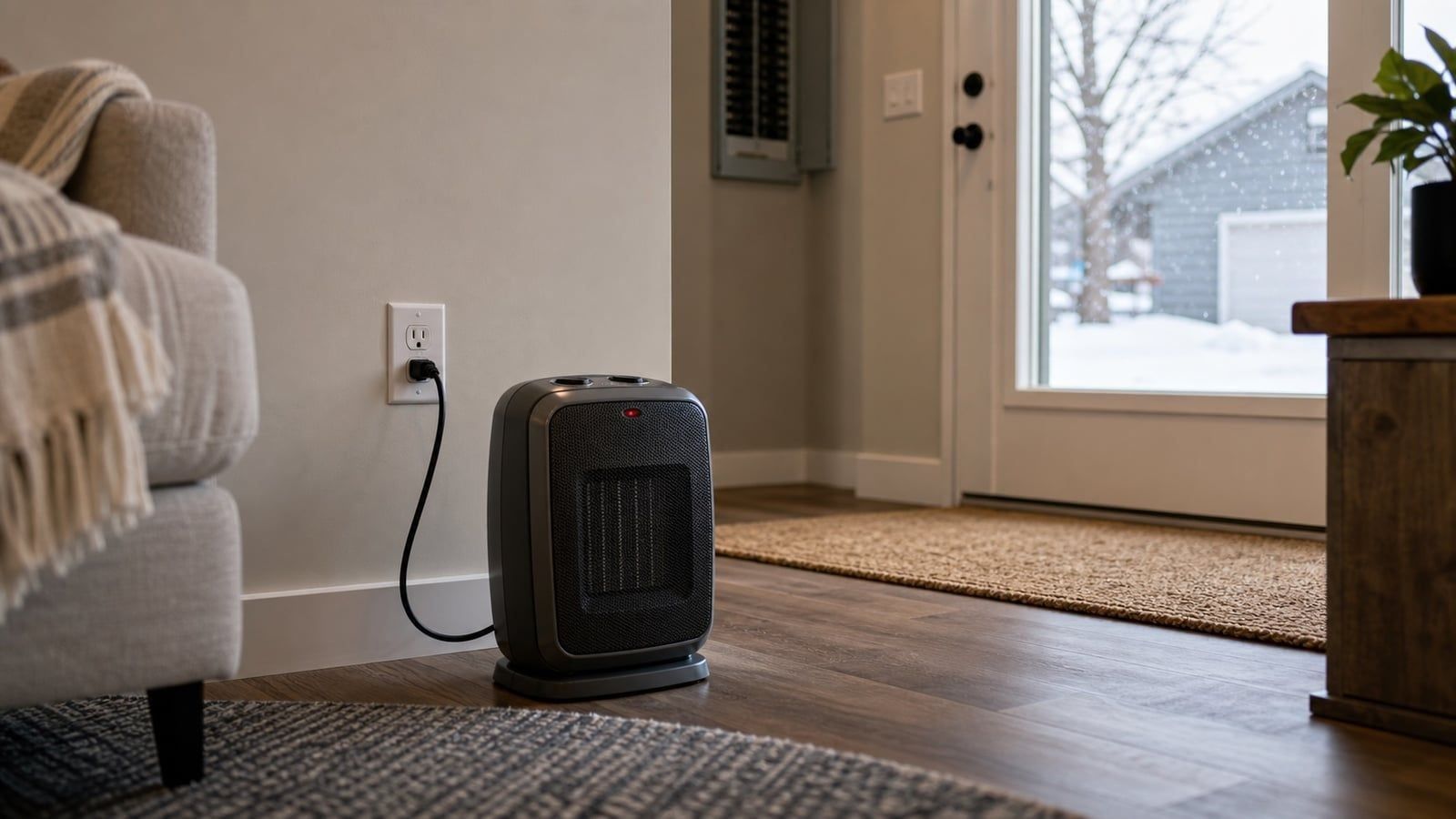
Space heaters are one of the leading causes of winter electrical fires. They draw significant power and should always be plugged directly into wall outlets—never into extension cords or power strips.
Space heater safety rules:
- Use only one space heater per outlet
- Keep heaters at least 3 feet away from curtains, furniture, and bedding
- Turn off and unplug space heaters when leaving the room
- Never run space heaters while sleeping
- Choose models with automatic shut-off features
The math behind the danger: A typical 1,500-watt space heater draws 12.5 amps on a standard 120V circuit. Most home circuits are 15 or 20 amps. If you're running a space heater plus a lamp, phone charger, and laptop on the same circuit, you're pushing the limit. Add an older home with aluminum wiring (common in 1960s-70s Utah homes), and you have a serious fire risk.
What you need to know about your home: Most Utah homes built before 1990 weren't designed for the electrical load we use today. If you're using space heaters regularly, you likely need dedicated 20-amp circuits. We can install these for $200-400 per room—far less than dealing with fire damage or frozen pipes from a tripped breaker.
Better solution for chronic cold rooms: If you find yourself running space heaters in the same rooms every winter, consider permanent solutions like baseboard heaters on dedicated circuits or improving insulation. It's safer, more efficient, and adds value to your home.
3. Install Heat Cable to Prevent Ice Dams
Ice dams on your roof can cause serious damage and create dangerous icicles. Professional heat cable installation prevents ice buildup in gutters and along roof edges, protecting both your home and anyone walking below.
Benefits of heat cable:
- Prevents expensive roof and gutter damage
- Reduces risk of falling ice
- Keeps water flowing away from your foundation
- Lower energy costs than dealing with water damage
Why Utah homes need this: The Wasatch Front's unique climate creates perfect ice dam conditions. We get heavy snowfall, then sunny days where south-facing roofs warm up and melt snow, which refreezes when it hits the cold north-facing eaves. This cycle creates massive ice dams that can:
- Tear off gutters (we've seen 6-inch thick ice weighing hundreds of pounds)
- Force water under shingles and into your attic
- Create dangerous icicles over doorways and walkways
- Damage fascia boards and soffits
Cost reality: Heat cable installation typically costs $8-15 per linear foot, so a typical home runs $800-2,000. A single insurance claim for ice dam water damage averages $10,000-15,000, plus your deductible and increased premiums. The math is simple.
Installation timing: We install heat cable year-round, but fall is ideal before snow accumulation makes roof work dangerous. If you already have ice dams, we can often install cable during winter thaws, but it's more expensive and difficult.
DIY warning: Heat cable seems simple, but improper installation is dangerous. We regularly fix DIY jobs where homeowners used indoor-rated cable, created fire hazards with improper connections, or installed cable that doesn't actually prevent dams. Licensed electricians know proper routing, GFCI requirements, and local code.
Our team installs heat cable systems throughout Davis, Weber, and Salt Lake Counties. Call us at 801-458-0831 for a free consultation.
4. Check Outdoor Electrical Connections
Winter weather can damage outdoor electrical outlets, lights, and connections. Water intrusion, freezing temperatures, and snow accumulation can all lead to electrical hazards.
Winter outdoor electrical checklist:
- Ensure all outdoor outlets have weatherproof covers
- Check that GFCI outlets are functioning properly
- Inspect outdoor lighting fixtures for damage
- Clear snow away from electrical meter and panels
- Trim trees and branches away from power lines
The freeze-thaw problem: Utah's daily temperature swings wreak havoc on outdoor electrical. Water gets into junction boxes during the day, freezes at night and expands, cracking seals and housings. We see this cycle destroy outdoor outlets in 2-3 years without proper weatherproof covers.
GFCI testing is critical: Test every outdoor GFCI outlet monthly during winter by pressing the "TEST" button—the power should cut immediately. Press "RESET" to restore power. If it doesn't trip or won't reset, replace it immediately. These devices prevent electrocution and are required by code for all outdoor outlets.
Snow accumulation dangers: Keep your electrical meter and main panel clear of snow. Utility companies need access for meter reading, and deep snow can damage meter housings. We've seen cases where melting snow caused water intrusion into panels, creating shock hazards and major repair bills.
Holiday lighting safety: If you're still running holiday lights, make sure:
- All outdoor connections use weatherproof extension cords (look for the "W" rating)
- GFCI outlets protect every outdoor circuit
- Connections are elevated off the ground (snow and ice create shock hazards)
- Lights are rated for outdoor use (indoor lights aren't weatherproof)
- You're not daisy-chaining more than 3 light strings together
5. Don't Ignore Warning Signs
Your home's electrical system will give you warning signs before major problems occur. Don't ignore these red flags:
- Flickering lights when heating systems turn on
- Warm or discolored outlets indicating overheating
- Burning smells near electrical panels or outlets
- Buzzing or humming sounds from outlets or switches
- Frequent circuit breaker trips
Any of these signs could indicate a serious electrical issue that requires immediate professional attention.
What each warning sign means:
Flickering lights when heating kicks on: This means your electrical service is undersized for your home's demand. Many older Utah homes have 100-amp service that was adequate in the 1970s but can't handle modern heating plus all our devices. Upgrading to 200-amp service costs $2,000-4,000 but prevents dangerous voltage drops that damage electronics and create fire risks.
Warm outlets or switches: Electricity creates heat when connections are loose or circuits are overloaded. A warm outlet is an outlet on its way to failure—possibly catastrophic failure. If you feel warmth, stop using that outlet immediately and call an electrician. We find loose connections, backstabbed wires, or aluminum wiring oxidation in 90% of warm outlet calls.
Burning smell: This is often the first sign of an electrical fire starting inside your walls. The smell comes from wire insulation melting or burning. If you smell burning plastic or an acrid odor and can't locate a source, turn off power at the main breaker and call an emergency electrician. Do not ignore this—we've arrived at homes where fires were smoldering in walls.
Buzzing or humming: This usually means a loose connection that's arcing, a failing outlet or switch, or an overloaded circuit. The sound is literally electricity jumping across gaps. Arcing creates extreme heat and is a primary cause of electrical fires.
Frequent breaker trips: Circuit breakers trip to protect your home from fire. If you're resetting breakers weekly (or daily), that circuit is overloaded, there's a short circuit, or the breaker itself is failing. This is especially common in winter when heating loads stress circuits. The solution is not a bigger breaker—it's identifying and fixing the problem.
Bonus: Preventing Frozen Pipe Disasters
While not strictly electrical, your electrical system plays a crucial role in preventing frozen pipes—one of the most expensive winter disasters homeowners face.
Heat tape for pipes: Similar to roof heat cable, heat tape wraps around vulnerable pipes in crawl spaces, garages, and exterior walls. It costs $15-30 per foot installed and prevents thousands in water damage. Key areas to protect:
- Pipes in unheated garages or crawl spaces
- Exterior hose bibs (yes, even after you've drained them)
- Pipes running along exterior walls, especially on north-facing sides
- Supply lines to detached buildings
Smart thermostats and alerts: Modern smart thermostats can alert you if your home temperature drops below a safe level when you're away. We install thermostats with freeze detection that can send alerts to your phone and even trigger backup heating systems. This is invaluable if you travel during winter or own rental properties.
Garage door openers and frozen pipes: Many frozen pipe disasters happen in garages where people forget to close the door. We can install automatic garage door closers with temperature sensors that close your door when temps drop below freezing. Costs $200-400 and prevents $5,000+ frozen pipe disasters.
Stay Safe This Winter
Electrical safety is crucial year-round, but Utah's harsh winters create unique challenges. Whether you need a safety inspection, heat cable installation, or emergency electrical repairs, Brightline Electric is here to help.
Serving Northern Utah:
- Salt Lake City
- Ogden
- Layton
- Kaysville
- Farmington
- Centerville
- Bountiful
- Davis County
- Weber County
Don't wait for an electrical emergency. Contact our licensed electricians today for a comprehensive winter safety inspection.
Call 801-458-0831 or request a free quote to schedule your service.
Brightline Electric is a licensed and insured electrical contractor serving Northern Utah since 2015. Our experienced electricians are available for emergency services, repairs, installations, and safety inspections.